Retirement Diversification in an Uncertain Environment
Building a retirement portfolio has always required trade-offs. Investors weigh growth potential against stability, liquidity against yield and short-term risk against long-horizon security. For most of the past four decades, a mix of equities and bonds provided a workable framework for managing those trade-offs. That consensus, however, has come under pressure.
Persistent inflation, expanding government debt levels and the occasional sharp correlation between stocks and bonds during market stress have pushed more investors to think about what truly diversified retirement savings look like. Some of that thinking has led to renewed interest in physical assets, and gold in particular.
This article is not an endorsement of any investment strategy. It is an attempt to explain clearly what a Gold IRA is, why some investors include precious metals in their retirement planning and what the practical considerations look like for anyone evaluating this option.
What a Gold IRA Is
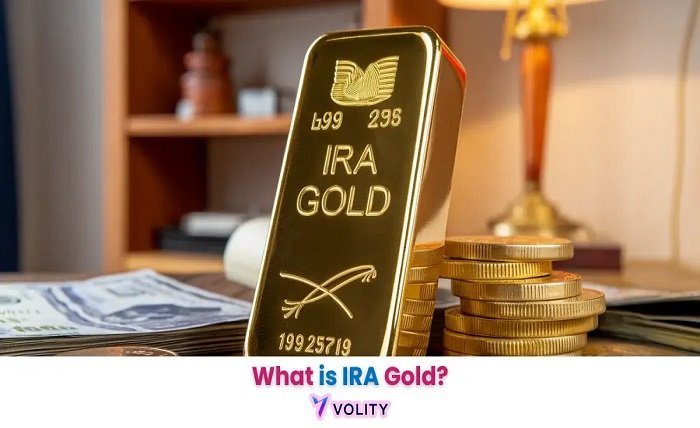
A Gold IRA is a self-directed individual retirement account that holds physical precious metals rather than conventional financial assets like stocks, mutual funds or bonds. The name is somewhat informal. These accounts can hold gold, silver, platinum and palladium, provided the metals meet the purity standards set by the Internal Revenue Service.
The key word in that description is self-directed. A standard IRA, whether held through a brokerage or a bank, is typically limited to securities and other financial instruments. A self-directed IRA broadens the eligible asset types to include real estate, private equity and, in this case, physical commodities.
From a tax perspective, Gold IRAs function like traditional or Roth IRAs. Contributions to a traditional Gold IRA may be tax-deductible, and earnings grow tax-deferred until withdrawal. A Roth Gold IRA uses after-tax contributions, and qualifying withdrawals in retirement are tax-free. The underlying tax mechanics are identical to those of standard IRA structures.
Where Gold IRAs depart from convention is in custodianship, storage and the physical nature of the asset itself. Those differences carry real implications for cost and complexity, which are worth understanding before making any decisions. Investors who want a thorough primer on the structure will find that resources explaining how a Gold IRA works can fill in considerable detail beyond what a single article can cover.
Why Investors Consider Precious Metals
The appeal of gold as a financial asset has endured across centuries and economic systems. That durability is itself meaningful. Several specific properties explain why investors include it in retirement planning discussions.
Inflation is probably the most frequently cited reason. Gold is a finite physical resource that cannot be printed or digitally created. During periods when central banks expand the money supply significantly, investors have historically gravitated toward assets whose supply is constrained. Whether gold reliably tracks inflation over shorter time horizons is genuinely debated among economists, but its long-run relationship with purchasing power is reasonably well-documented.
Diversification is a second consideration. Portfolio theory holds that combining assets with low correlation to each other reduces overall volatility without necessarily reducing returns. Gold’s correlation to equities is inconsistent, but it has shown a tendency to behave differently from stocks during certain kinds of market stress, particularly those driven by currency concerns or geopolitical instability.
Long-term store of value is a third argument. Unlike a bond, gold does not have a coupon or a maturity date. Unlike a stock, it generates no earnings. What it offers is permanence. For investors who are skeptical of paper assets over a 20- or 30-year horizon, that permanence has genuine conceptual appeal.
None of these arguments are guarantees. Gold can and does go through extended periods of flat or declining prices. It produces no income. Storage and custodial costs create a structural drag on returns. Investors should weigh these realities alongside the potential benefits.
How Gold IRAs Work in Practice
Opening and maintaining a Gold IRA involves more moving parts than a standard brokerage IRA. Understanding the basic structure helps investors ask better questions and avoid surprises.
The custodian is the starting point. The IRS requires that all IRA assets be held by an approved custodian, typically a bank, credit union or specialized financial institution. For self-directed IRAs, the custodian must be equipped to administer non-traditional assets. Not all custodians offer this capability, so investors need to identify one that specifically handles precious metals IRAs.
The metals themselves must meet IRS purity requirements. Gold must be at least 99.5% pure. Silver must be 99.9% pure. Platinum and palladium must each meet a 99.95% purity standard. Certain coins, including American Gold Eagles and American Silver Eagles, are explicitly approved. Collectible or numismatic coins are generally not eligible, regardless of their gold content.
Storage is non-negotiable. The IRS does not permit account holders to keep IRA-owned metals at home or in a personal safe. The metals must be held at an approved third-party depository. These facilities are typically insured and audited, and they offer either segregated storage, where your metals are held separately from other clients’ holdings, or non-segregated storage, where metals are pooled but ownership is tracked by weight and type.
Distributions follow the same rules as any other IRA. Withdrawals before age 59½ are subject to income tax and a 10% early withdrawal penalty. Required minimum distributions apply starting at age 73 under current IRS rules. When taking a distribution from a Gold IRA, the investor can either receive the physical metal or have it liquidated for cash, depending on what the custodian allows.
What Investors Should Evaluate Before Proceeding
The decision to open a Gold IRA should follow careful evaluation of several practical factors.
Fees are a significant consideration. Gold IRAs carry costs that standard IRAs do not. Custodians charge account setup fees and annual maintenance fees. Depositories charge storage fees, which may be structured as a flat annual rate or as a percentage of assets under custody. Dealers charge a markup above the spot price of gold when you purchase metals. These costs accumulate over time and should be factored into any realistic return projection.
Custodian quality matters considerably. The self-directed IRA space has attracted its share of questionable operators over the years. Investors should look for custodians with verifiable regulatory standing, a clear complaints history and transparent fee disclosures. Firms that discourage questions, pressure quick decisions or fail to provide written documentation of their fee structures are worth avoiding.
For investors who are in the process of comparing providers, reviewing the best gold IRA companies across criteria like fees, depository relationships and account minimums can help narrow the field to options that are worth a closer look.
Portfolio allocation is another question worth thinking through carefully. Financial planners who include precious metals in their recommendations typically suggest a modest allocation, somewhere in the range of 5% to 15% of a retirement portfolio, rather than concentrating a large share of savings in a single commodity. Gold does not pay dividends or interest, and over long periods, a diversified equity portfolio has generally produced stronger total returns. The case for gold is as a stabilizer and hedge, not as a primary growth engine.
Tax implications of rolling over existing retirement assets deserve attention as well. Moving funds from a 401(k) or traditional IRA into a Gold IRA can be done without triggering taxes if the transfer is handled correctly as a direct rollover. An indirect rollover, where the account holder receives funds and must redeposit them within 60 days, creates more complexity and risk of unintended tax consequences.
A Balanced Perspective on Precious Metals in Retirement
Gold IRAs occupy a legitimate corner of retirement planning for certain investors. They offer a way to hold a tangible, historically durable asset within a tax-advantaged structure, and they provide access to an asset class with a different risk profile than equities or bonds.
At the same time, they are more complex and more expensive to maintain than standard retirement accounts. The added administrative burden, custodial requirements and storage costs are real. Gold’s price history includes long stretches of disappointing performance alongside its periods of strength.
The investors most likely to find Gold IRAs useful are those who understand what they are buying, have done the work to compare providers carefully and are including precious metals as part of a broader, diversified retirement strategy rather than as a substitute for one.
Retirement planning ultimately comes down to making informed decisions under uncertainty. Gold IRAs are one tool in a large toolbox. Like any tool, their value depends entirely on whether they are used appropriately and in the right context. Before making any changes to a retirement portfolio, speaking with a qualified financial advisor who understands both traditional and alternative assets is always a sensible step.